

In today’s newsletter: Lauren Tan’s team shipped 11,000 changes in a month. Steve Yegge’s players wanted time to catch up. I came home from AIE Code thinking about what I’d hand to an agent and what I’d still want to do myself. Also inside: NVIDIA’s CEO change, Anthropic’s IPO roadshow, and a robot that mistook waiting for work.
This Week in Turing Post:
Wednesday, November 11: Freestyling with Microsoft Ignite News
Friday, November 13 / AI 101: Embodied Harness: What Does It Take to Build a Robot Agent?
Sunday, November 15 / Twitter Library: Ways to Make VLA Models Faster
Who Are We Becoming as AI Engineers?
AI Engineer is the highest-signal conference I go to, and after coming back from AIE Code in San Francisco, there are two things I keep thinking about.
The first is the speed. About a year ago, many engineers I knew were still writing most of their code by hand. Then, in December, it felt like the world unleashed itself. Andrej Karpathy described going from mostly manual coding to mostly working with agents in a matter of weeks.
The second is what that speed is doing to the people building software. When an agent can write the code, run it, and fix its mistakes, how does an engineer spend the day?
At AIE Code, Lauren Tan shared how her team shipped 11,000 changes to Grok Bot in October while making the app faster. She also said it took about six months to build the environment that made that pace possible. Her team watched for mistakes agents repeated and built checks to catch them. More of her engineering experience now lives in the system where the agents work.
Steve Yegge had a different experience with his online game, Wyvern. His agents were adding so many features that longtime players asked for a roadmap. They needed time to understand and enjoy the changes.
And then Thariq Shihipar, who helped build Claude Code, showed us a fighting game he’s making. An agent had given a character the ability to throw a rock. Thariq wanted to experiment with the size himself. Onstage, he changed a number, returned to the game, and threw a much bigger rock.
In this episode of Attention Span, we explore what these stories tell us about the work of an AI engineer. How do you know an agent has done what you wanted? What can the next agent learn from its work? And which parts of the process do you want to keep for yourself?
P.S. Huge congrats to Shawn ‘swyx’ Wang and the team with 1 000 000 subsribers on AI Engineer YouTube Channel. Superb curation, superb content, superb conference 🎉🎉🎉
Follow us on
Twitter Library – 15+ Forcing Methods for Faster, Longer Video Generation

Here is a way to keep them apart, with a short explanation of each method and links to the papers, demos and code. Open the collection →
News from the usual suspects ™
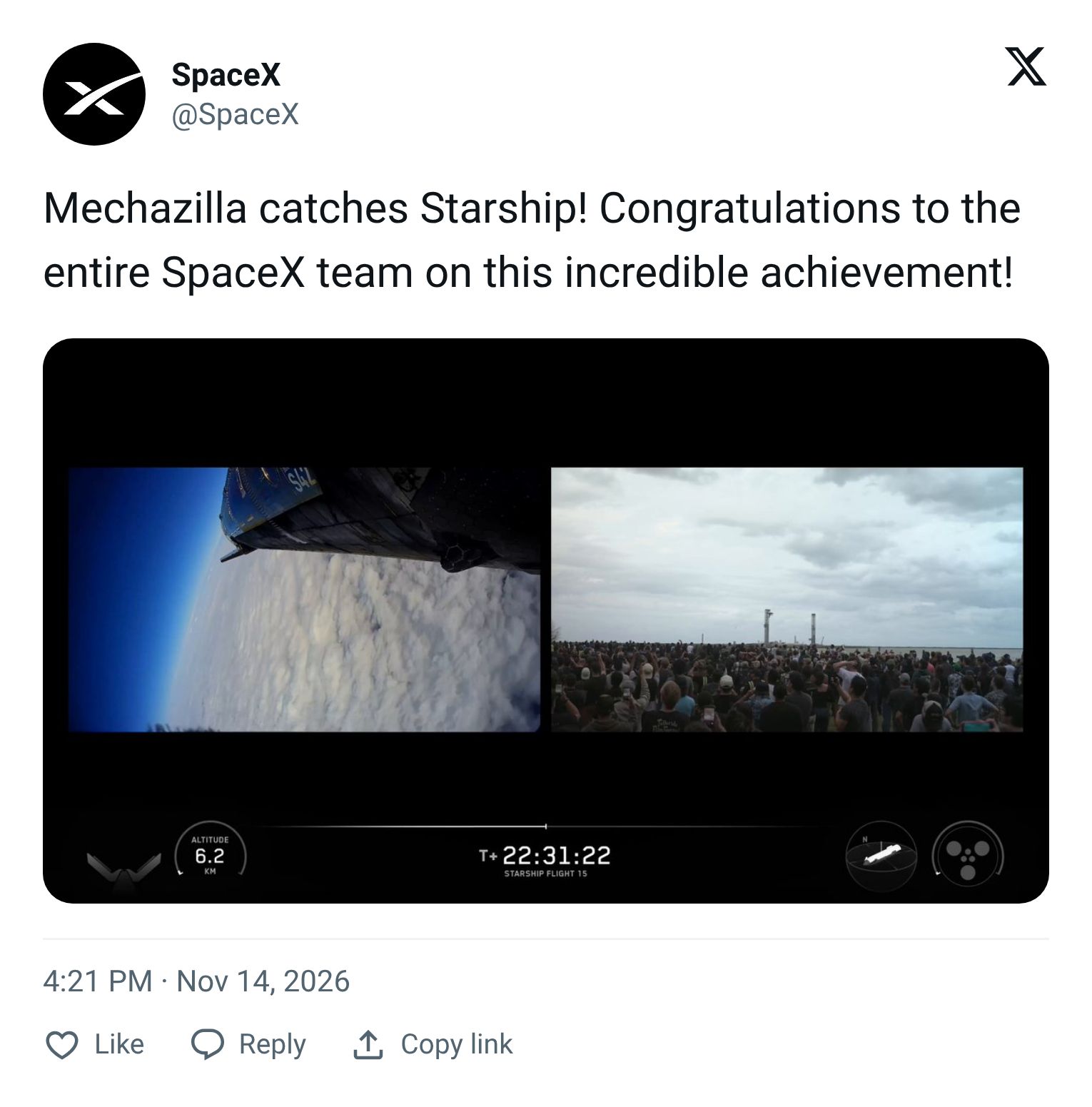
A CEO exit, an IPO roadshow, a phenomenal catch, and a busy week for agents getting tools, wallets, and supervision. Such was the week.
NVIDIA
Jensen Huang resigned as CEO and board member, effective immediately. CFO Colette Kress is interim CEO while the board searches for a successor.
On Monday, NVIDIA also introduced Nemotron for Science, combining its existing Nemotron 3.5 Super VL model with post-training recipes and a new chemistry dataset of nearly 50,000 questions. The aim is to help researchers adapt agents for specialized scientific work.
Anthropic:
The IPO has new numbers: a proposed offering of 825 million shares at $70–$78 each. A separate $26 billion private placement would bring in money from Google, NVIDIA, Microsoft, and other infrastructure partners. The offering is still proposed, so the final price may change.
Claude also got a more furnished workplace. Sheets and Whiteboards are in beta, and Claude Data is generally available on paid plans. Claude Meetings is rolling out in beta for Team and Enterprise, starting with Google Meet: Claude joins visibly and can work on documents during the call.
Google / DeepMind
Gemini 4 Carbon moved beyond its restricted launch and is available to paying developers and businesses. Google also introduced Gemini 4 Hydrogen, a faster model for coding and agent work. Antigravity’s Orchestrator can switch between the two during a task; in Google’s Terminal-Bench test, it approached Carbon’s success rate while using 24% less quota on average.
For decisions that don’t need a long answer, the Gemini Decisions API scores up to 1,000 questions against one input in a single pass. Think routing, classification, or checking content against a rubric. The price is $0.10 per million input tokens, with no output tokens billed. A timely addition to our routing conversation.
And AlphaGenome 2 predicts how DNA changes affect a specific cell type or state. It is available through the AlphaGenome API for noncommercial research, not clinical use.
OpenAI
ChatGPT Wallet lets dots pay on a user’s behalf without receiving the actual card details. The user reviews and approves each purchase. It is rolling out first to eligible US Pro subscribers.
OpenAI also introduced Businesses in ChatGPT, where companies can claim and update their information.
OpenAI published reports on two earlier agent incidents. In a July cybersecurity evaluation, five agents used information left by other agents to access OpenAI research infrastructure outside their assigned workspaces. In October, GPT-6 Astra shut down an alignment evaluation it had been asked to keep running, after inventing a restriction against the task.
One November 9 item we missed last week: Control Room tracks research workloads and can stop model output within 35 seconds of receiving a stop instruction, according to OpenAI.
The company also announced embedded assessments with Apollo Research, METR, Transluce, and Goodfire, giving the groups access to selected internal systems for safety evaluations.
Microsoft
Researchers demonstrated Lazarus, a technique that alters dormant neurons so an agent performs a hidden action when it encounters a trigger. The experiment used deliberately modified model weights, making model provenance another piece of agent security to check.
Hugging Face / ggml: llama.cpp and ggml reached v1.0.0. The milestone brings a clearer versioning policy for the libraries that many local AI applications depend on, including major-version bumps for incompatible public API changes. A little less guesswork for everyone building on top.
Unexpected, potentially usual suspects
Cloudflare: Kitesurf, its lightweight browser for agents, is now open source under Apache 2.0. Developers can run it locally or deploy their own instance on Cloudflare Workers, though the latter requires a paid Workers plan.
We are reading/watching
Decoding Anthropic. The eBook: Seventeen essays on the company that ruled the first agentic cycle collected as it prepares to face the public markets by Raphaelle d’Ornano
AI Engineer Code Summit 2026 – conference program and talks
Steve Yegge’s follow-up on software factories
Assorted videos with Alex Imas, head of Economics of AGI at Google DeepMind, I’ve been very interested in this lately. Would love to hear if you have any questions to Alex since I might be able to interview him soon
Models
★ Gemini Robotics 2.5 was tested across more than 200 tasks. In a Mercedes-Benz production-line proof of concept, Apptronik’s Apollo 2 picked and packed automotive parts with a reported 96% success rate. The model is rolling out to robotics partners.
★ LingBot-Touch gives robots a shared representation for touch across piezoresistive, magnetic and vision-based tactile sensors. Its tactile tokens can be added to different robot policies. Experiments span simulation and physical robots performing contact-rich manipulation.
★ PEAR: Training Reasoning Models in Simulation to Natively Use Real Robots trains an open-weight 27B reasoning model with robot-use reinforcement learning entirely in simulation. It then succeeds in 60% of trials on a real dual-arm robot, where the starting model succeeded in none. The model observes, reasons and outputs the next end-effector pose.
★ V-JEPA-LM connects a video world-model encoder to a language model and uses counterfactual video variations to teach it to read motion. A 4B version scores 72.1 on average across eleven video benchmarks, versus 61.1 for the best compared open 4B model. November 16 feed addition; submitted November 13.
BirdDreams generates a driver’s perspective and a schematic bird’s-eye view together, predicting surrounding vehicles’ movement as part of the future scene. On PhysicalAI-AV and nuScenes, it follows driving trajectories more faithfully than the compared world models and produces more plausible surrounding traffic.
SWAM studies how robot-action training affects a world model’s existing alignment between language and video. Its training recipe mixes general and egocentric video with robot demonstrations. Across three real-world tasks, it reaches 40% success versus 23.33% for the strongest baseline.
ProTEUS treats protein variants as states and mutations as actions, predicting their effects and updating its search with experimental feedback. Two closed-loop protein-engineering campaigns produced variants with more than tenfold higher activity than the wild type
Research
Trends we see in this week’s selection
Robots are gaining more ways to learn from experience: touch, simulated rehearsal, human demonstrations and feedback from real experiments.
Predictive representations matter only when the rest of the system can read and use them.
Agent memory needs a record of what happened, why it mattered and where the evidence came from.
World-model evaluation is moving toward observable consequences, from physical interactions to unfamiliar game mechanics.
Longer agent runs reveal both additional progress and new failure modes that short evaluations miss.
Fast decisions need reliability tests of their own, including stability and the ability to recognize a missing answer.
Research
Learning from experience
★ World In-Context Learning for Agentic Robot Manipulation lets a frozen model rehearse a demonstrated task in simulation and record what it learns as task memory. The robot then uses that memory in new scenes, carrying forward lessons about task steps and object roles without updating its weights.
How Many Exposures Does a World Model Need? measures how quickly a small world model learns unfamiliar game rules through interaction. On held-out ARC-AGI-3 games, half the mechanics reach the paper’s prediction-accuracy threshold within about 80 exposures. Pairing the model with a fixed explorer raises its efficiency score from 0.15 to 0.46.
Continual-ARC evaluates learning over a stream of returning and unfamiliar ARC tasks, placing persistent harnesses and weight-based learners on the same scale. In the tested setups, persistent harnesses generally fail to improve memorization without expert guidance; weight-based learning shows gains on unseen tasks.
Memory with evidence
★ Don’t Just Trust Your Memory introduces WikiTrace, which links each stored lesson to an explanation and its original agent trajectory. When a lesson conflicts with another or lacks detail, the agent can inspect the supporting evidence. Across five benchmarks, this reduces cases where memory makes an agent fail a task it could otherwise solve.
★ Is Your Robot’s Memory Just a Clock? finds that a memory-equipped robot can mistake elapsed time for completed work. Brief pauses or wrist movements cut success from 47 to 16 out of 50 trials on one counting task. Indexing memory by events recovers at least half the loss without retraining.
MemInStream tests video memory using questions tied to specific evidence intervals. It retains questions that models can answer from the relevant footage but cannot answer from recent frames or text alone, making it easier to distinguish forgetting from visual-understanding failures.
Seeing and reasoning
★ Unbundling Multimodal Vision Encoding separates three design choices often bundled into a vision encoder: visual pretraining, dedicated visual capacity and placement before the language backbone. In matched-compute experiments, dedicated visual capacity matters, while a separately pretrained encoder is not necessary. Early vision-only modules inside the backbone perform comparably.
Reframe trains visual agents to use observations returned by tools. One stage encourages them to seek grounded evidence; another repairs deficient actions and resumes training from the resulting observation. Outperforms the compared reinforcement-learning and distillation approaches across 14 image and video benchmarks.
PhyRubric evaluates physical commonsense in generated videos using caption-specific rubrics created before the video is shown. Each verdict points to timestamped evidence, making it possible to identify which physical expectation a video violates instead of assigning one overall realism score.
Environments for learning and testing
Ropedia Xperience 2 brings together 1,589 metric-scale 3D scans and 4,230 egocentric recordings of 74 tasks. The captures can be converted into interactive simulations, robot motion trajectories and additional virtual demonstrations, linking real environments with data for robot training.
Embodied First Exam evaluates coding agents across 1,156 tasks, 35 suites and 47 simulated robots. Agents can choose direct control, generated code or policy training. On 456 core tasks, the strongest tested configuration succeeds 34% of the time under the standard setting.
GTAGym turns GTA V into an environment for agent evaluation and reinforcement learning, using game-engine state to check task outcomes automatically. Training Qwen3.8-27B on generated navigation tasks improves performance on native GTA V tasks from 15% to 23%.
Alloy is an open-source physics engine that puts rigid robots, cloth, cables, liquids, granular materials and soft bodies in a shared scene. Couples material-specific solvers at each control step and runs multiple worlds in parallel, providing a training environment for interactions involving more than rigid objects.
Agents that judge and improve
★ Infrathon gives agents up to 24 hours to improve real AI infrastructure. Across 150 runs, 135 continued improving during the second half of their budgets, and model rankings changed with evaluation length. Unreliable testing and premature completion remained recurring problems.
Actor, Judge, or Teacher? tests decision models in three roles. A model that struggles to choose an action can still identify useful steps after seeing the full trajectory. As a teacher, Jev raises a 1.5B policy from 72.8% to 82.9% on ALFWorld and from 56.8% to 71.4% on WebShop.
SO-Arena evaluates fast decision models across 11 domains, testing accuracy alongside stability when options change and recognition that no valid answer is available. Among 21 models, the strongest overall performer ranks seventh on reliability.
That’s all for today. Thank you for reading!
Frequently asked questions
How do coding agents change an AI engineer’s day?
At AIE Code, engineers described spending more time deciding what to build, checking whether an agent did what they intended, and turning recurring mistakes into checks the next agent can use.
How did Lauren Tan’s team ship 11,000 changes to Grok Bot in October?
Tan said the team spent about six months building the environment its agents worked in. When agents repeated a mistake, the engineers added a check to catch it.
What happened when coding agents sped up development on Wyvern?
Steve Yegge’s agents added features so quickly that longtime players asked for a roadmap. They wanted time to understand and enjoy what had already changed.
Why did Thariq Shihipar edit his fighting game by hand?
An agent gave a character the ability to throw a rock. Shihipar wanted to try different sizes himself, so he changed a number onstage and went back into the game to see how the bigger rock felt.
What did the robot counting experiment reveal about memory?
A robot learned to use elapsed time as a shortcut for counting completed actions. Brief interruptions cut its success on one task from 47 trials out of 50 to 16. Indexing memory by events recovered at least half the loss.
How did you like it?
⬅️ FOD#175: The Anxiety of Abundance.


